Reef
Life: Natural History and Behaviors of Marine Fishes and
Invertebrates
By Denise
Nielsen Tackett and Larry Tackett
(TFH
Publications-Microcosm. One TFH Plaza, Neptune City, NJ 07753.www.tfh.com.email:
dcimino@tfh.com.Hard
cover, $39.95 ISBN 1-890087-55-6; Soft cover, $29.95, ISBN
1-890087-56-4).
The volume
contains 224 pages, illustrated with excellent color underwater
photographs. There is a useful glossary, a valuable bibliography
and an index.
Underwater
photographer/journalists Denise and Larry Tackett have put their
extensive diving experience in the beautiful and diverse reefs
and lagoons of Indonesia, Beau, New Guinea, the Maldives and
Seychelles for more than 10 years, to create a book that fills a
vacuum in the literature of importance to marine aquarists.We have a number of fine works on the creation and
maintenance of closed reef systems and associated organisms and
there are very informative, highly technical academic volumes on
marine biology, but there is little in the way of an accessible
intermediate-level treatment of the biology of reef organism
presented in a visually appealing way.This volume is an important step toward filling that gap.
Reef
Life opens with a forward by Ron Shimek, "Looking
Closer," in which he states "If the authors succeed in
simplifying marine biology concepts and basic terminology for more
divers and aquarists, they will have done a yeoman's service to
all of us who care about the future of these threatened
environments.... Full of beautiful and uncommon organisms and
important-to-know-behaviors, Reef
Life is an obvious labor of love and a highly commendable
primer on reef life."The
authors have succeeded in this undertaking.An example of the way in which they proceed to present not
only striking underwater photos, but detailed information as well,
the beautiful page-and-a-half photograph of fishes under a
tabletop Acropora on pages 10 and 11 is reproduced in
miniature on page 12, this time with each organism numbered and
referenced with their common and scientific names.This useful technique of "looking closer" to
dissect a complex photograph is used throughout the book to
excellent effect, and adds greatly to its educational value.
Proud sponsor of this column
The
forward is followed by a prologue on "Reef Exploration" in
which the authors chronicle their diving experiences, from their initial
work collecting sponges for research on anti-viral and anti-cancer
agents derived from those organisms' defensive chemical arsenal, to the
photojournalism that currently occupies them.Underwater photographers will appreciate the details on
equipment and technique the authors provide in this section.
Chapter 1
presents the basics of "Reef Origins."The geography of reef distribution, the oceanographic parameters
required for reef formation, reef types, reef zonation, and the
ecological niches or realms of reefs, are covered, along with
discussions of species diversity, competition and the role of reef
building scleractinians.As
is the general strategy throughout the book's chapters, each section is
heavily illustrated, with many of the large-scale photos also duplicated
in labeled and notated form, and with good diagrams and drawings used
where appropriate.
Chapter
2, "Reef Dwellers," concentrates on the reef's biomes and the
great diversity of reef organisms, from plankton through mammalia.In the chapter's "Webs of biodiversity" section, the
authors review the taxonomy of coral reef life and provide 20 pages of
outstanding photographic images of many genera exemplifying major
taxonomic divisions, with accompanying descriptive text.Chapter 3 discusses "Near-Reef Habitats" and the
associated organisms of the sandy bottoms, mangroves, sea grass beds and
lagoons and estuaries, as well as the pelagic community.
Chapter
4, "Living Together," discusses the fascinating subjects of
symbiosis and other "coordinated reef survival strategies"
such as mutualism and commensalism, as well as parasitism.It also includes discussions of social behaviors like shoaling
and chemical cues to "settling out."Chapter 5 focuses on "Feeding Time."The authors present the biological concept of "feeding
guild" to analyze types of food resources utilized and describe the
subsets of animals and styles within the primary guilds.Predation adaptations and techniques and their relationship to
food sources, and nutrient cycling are covered, with the discussions
aided by illustrative photos.
Chapter
5, on "Protection and Defense," and chapter 6 titled
"Masquerade," which covers mimicry and camouflage are next,
each with outstanding photographic examples.Although the concepts may be familiar, the extraordinary
illustrations, especially the 22 pages of pictures of examples of
mimicry are a tour de force.The
final chapter in the main section of the book, Chapter 7,
"Reproduction," deals with the procreative behaviors and
strategies of reef and near-reef dwellers.
The text of Reef Life
concludes with "Disappearing Reefs," concentrating on
destructive anthropogenic impacts on reefs.I know that the great majority of marine aquarists are
aware of the devastation that is caused to reef environments by
human activities (for example, see the discussion below of
"white pox disease") and the probably irreversible loss
of a large and increasing proportion of world coral reefs, but it
is important that we not bury our heads in aragonite but instead
join the organizations and groups such as Reef Relief (also
mentioned below) who are struggling to halt the damage and where
possible, reverse it.Read
this chapter although it hurts.
Proud sponsor of this column
I
recommend this book, especially to those who have avoided (or been
intimidated by) the technical research and theoretical literature on
marine biology.The quality
of the publishing is up to the high standards we have come to expect
from Microcosm - the many excellent color photographs, virtually at
least one and usually more on every page, are reproduced well and the
text is well organized and accessible.The concepts are presented in highly readable form and the
illustrations make the text come alive.Even for those who are already familiar with the content, the
illustrations are easily worth the modest price of the book.
Periodicals
In
"The etiology of white pox, a lethal disease of the Caribbean
elkhorn coral, Acropora palmata" (Patterson
K. L. et. al., Proceedings of the National Academy of
Sciences. USA, Vol. 99, Issue 13, 8725-8730, June 25, 2002), a group
of marine biologists from, among others, the Universities of Georgia and
South Carolina, Clemson University, the Scripps Institute, and the U.S.
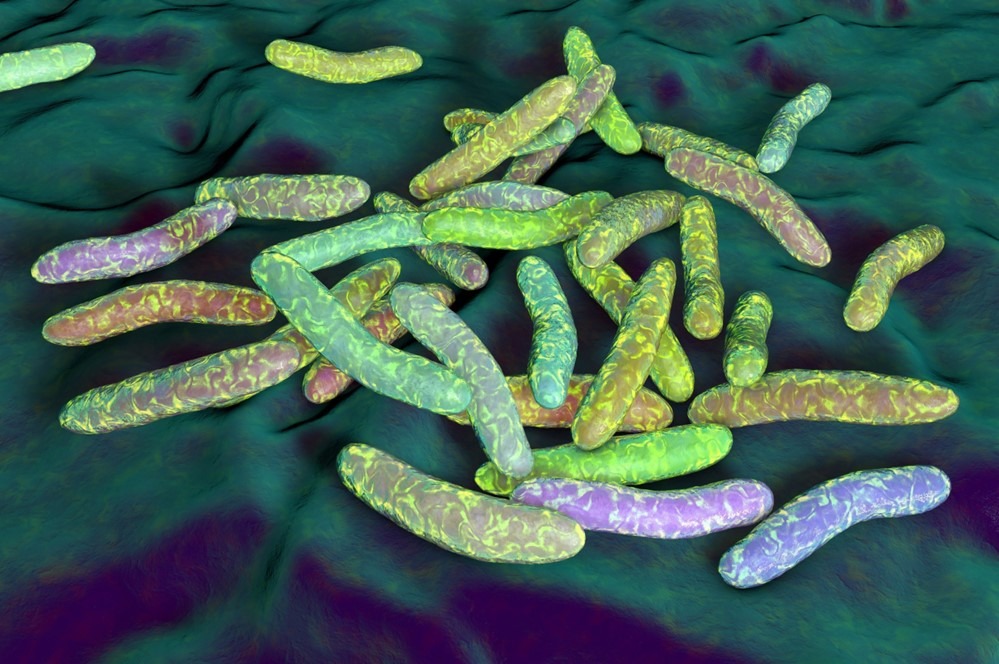
Environmental Protection Agency have identified a common human fecal
enterobacterium, Serratia marcescens,as the causal
agent of white pox coral disease, the first time that a bacterial
species of the humangut has been shown to be a marine
invertebratepathogen.Populations of A. palmata are being decimated by
white pox disease, with losses of living cover in the Florida Keys
typically in excess of 70% and approaching 85% in some areas. The rate
of tissue loss is rapid, averaging from 2 to 10 square centimeters per
day, and is greatest during periods of seasonally elevated temperature.
The
study indicated the spread of white pox fits the contagion model, with
nearest neighbors most susceptible to infection.The researchers, expecting to find a marine pathogen, identified
221 bacterial strains from samples of healthy coral and colonies
afflicted with white pox, four of which appeared more frequently on
diseased coral -but only Serratia
marcescens, was capable of causing the disease in healthy coral
samples.Elevated water
temperatures increase the rate of white pox-induced coral loss."Warmer water depresses coral growth but increases bacterial
growth.In combination,
this domino effect could foretell disaster. There appear to be
environmental changes occurring that may be making this nonpathogenic
bacterium pathogenic."
The
new evidence suggests that sewage treatment should be improved."Thousands of illegal cesspits still exist in this
county," says DeeVon Quirolo, executive director of Reef Relief, a
conservation group based in Key West, Florida. "The problem has
been denial as to whether there is a problem."Sewage regulations introduced in the Florida Keys National Marine
Sanctuary last year have already resulted in new coral growth on the
reef, says Quirolo: "We're on the road to recovery".
"Coral
Reef Diversity Enhanced by Hybrids" by Steven Vollmer of Harvard
University,
(Scientific
American,
June 14, 2002) discusses the mechanism by which Caribbean reefs maintain
biodiversity although the more than 100 species of coral spawn more or
less simultaneously, "forming a thin pink slick of intermingled
eggs and sperm."What appeared to be three distinct Acropora species
turned out to be two species, with the third a hybrid of the other two.The hybrid is for the most part sterile but can, however,
reproduce by cloning, generating what researchers call "immortal
mules" - animals that can survive for a very long time but not
breed sexually.
The
hybrids come in two different physical forms, "bushy" and
"palmate," the morphology dependent on the species the egg
comes from, with maternal mitochondrial DNA and egg cytoplasm
determining the form. The authors speculate that in this manner
cross-species offspring do not detract from the local biodiversity, but
rather enhance the morphological and ecological variation of the reef.The team suggests that the same effects may also occur on the
"hyperdiverse" indo-pacific coral reefs.
Jon
Copley, in "Coral reefs operate free-market economy," (New
Scientist, April 28, 02) reports on the findings of R.
Bshary of the University of Cambridge and D. Schaffer of the Max Planck
Institute for Behavioural Physiology, Germany.The authors claim to have seen competition at work in the
interactions between cleaner wrasse stations and their client fish on
the reefs of Ras Muhammad, on the Red Sea coast of Egypt.
Fish
were less likely to revisit stations where they had previously been
"cheated" when cleaners removed mucous or they had to wait in line
for cleaning."I would
not be surprised if clients eventually avoid a station completely if
they are cheated repeatedly," according to Bshary.
The
researchers conclude that by exercising what amounts to "consumer
choice", the client fish promote healthy competition between the
available cleaning stations, and this ensures good quality service.